I spent last month (November 2025) in Studio Kura for an artist residency, living in a small countryside village in Itoshima, where the road curved between rice fields and the sea was only a short walk away. Everything moved a little slower there—sunny mornings, wide skies, and the soft smell of farmland drifting through the air. I remember arriving with my usual pace, and then slowly adjusting to a different rhythm.
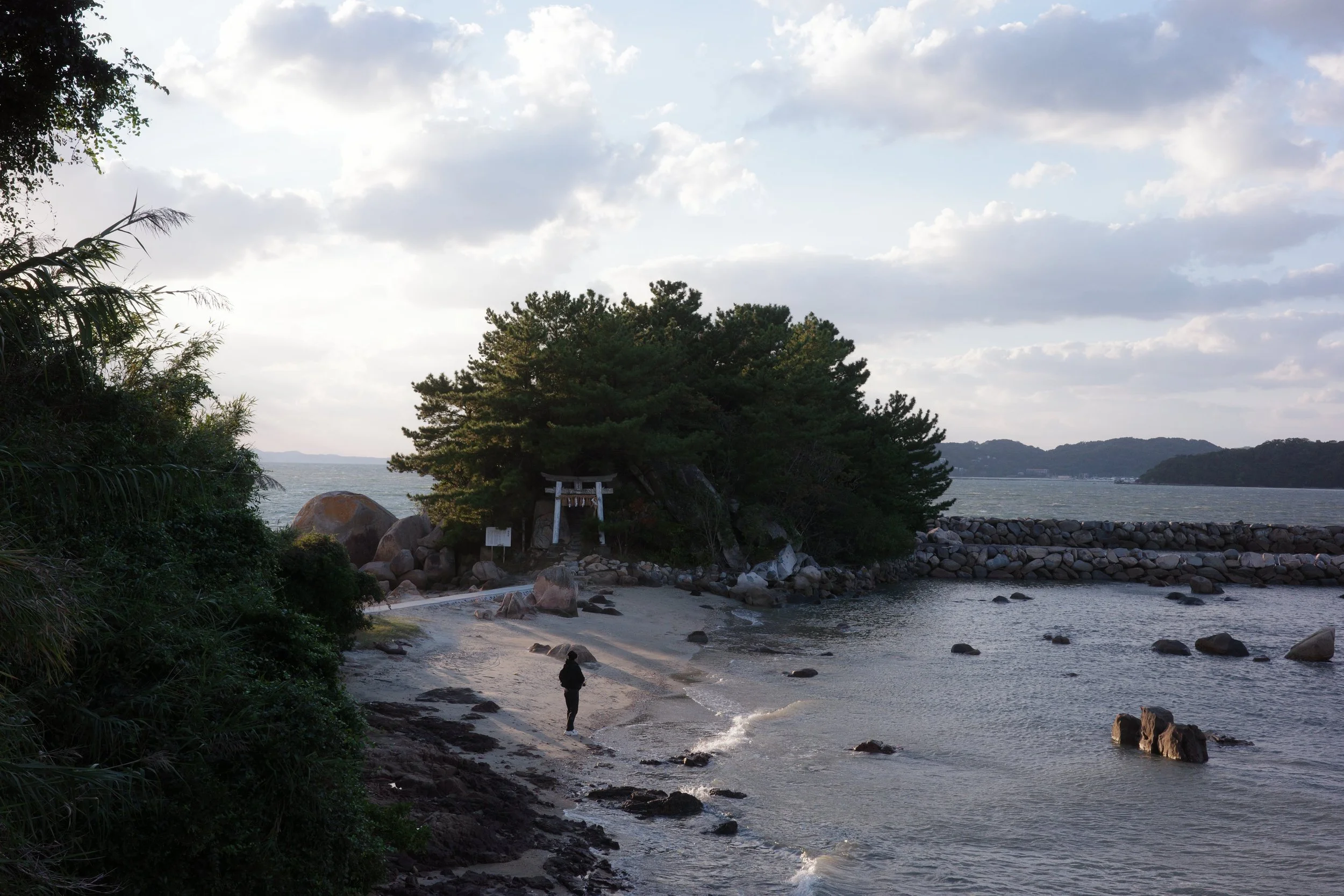
The Hakoshima Shrine by the beach
Most days began quietly. A bit of yoga, a simple breakfast, and then the familiar decision of which material to touch first. I cycled for groceries, passing through rice fields and local shrines, and sometimes finished the day with a slow walk by the beach during the golden hour. Time was marked not by the clock, but by the melody that played through the town at seven, noon, and five in the evening. At first it felt unfamiliar, then strangely comforting—it became the rhythm my body trusted.
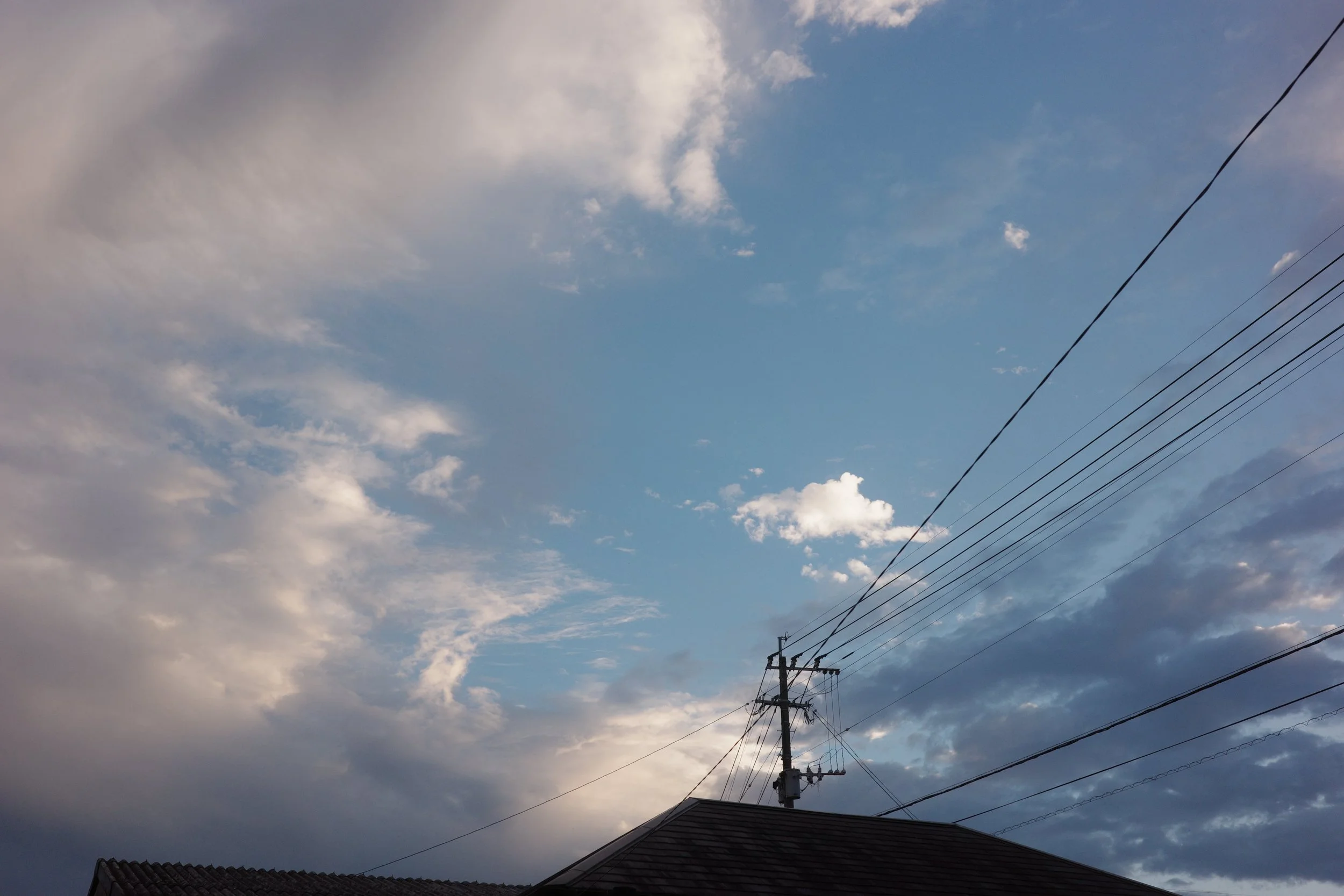
Sky view from the studio
Here and there, I found myself entering small pockets of community. The Karatsu Kunchi Festival filled the streets with energy I couldn’t fully describe—children and elders carrying the same rhythm. Another afternoon, we joined an elementary school music workshop and drew for the kids. It was simple, but something in me softened watching how naturally everyone participated, as if creativity wasn’t a separate activity but just part of daily life.
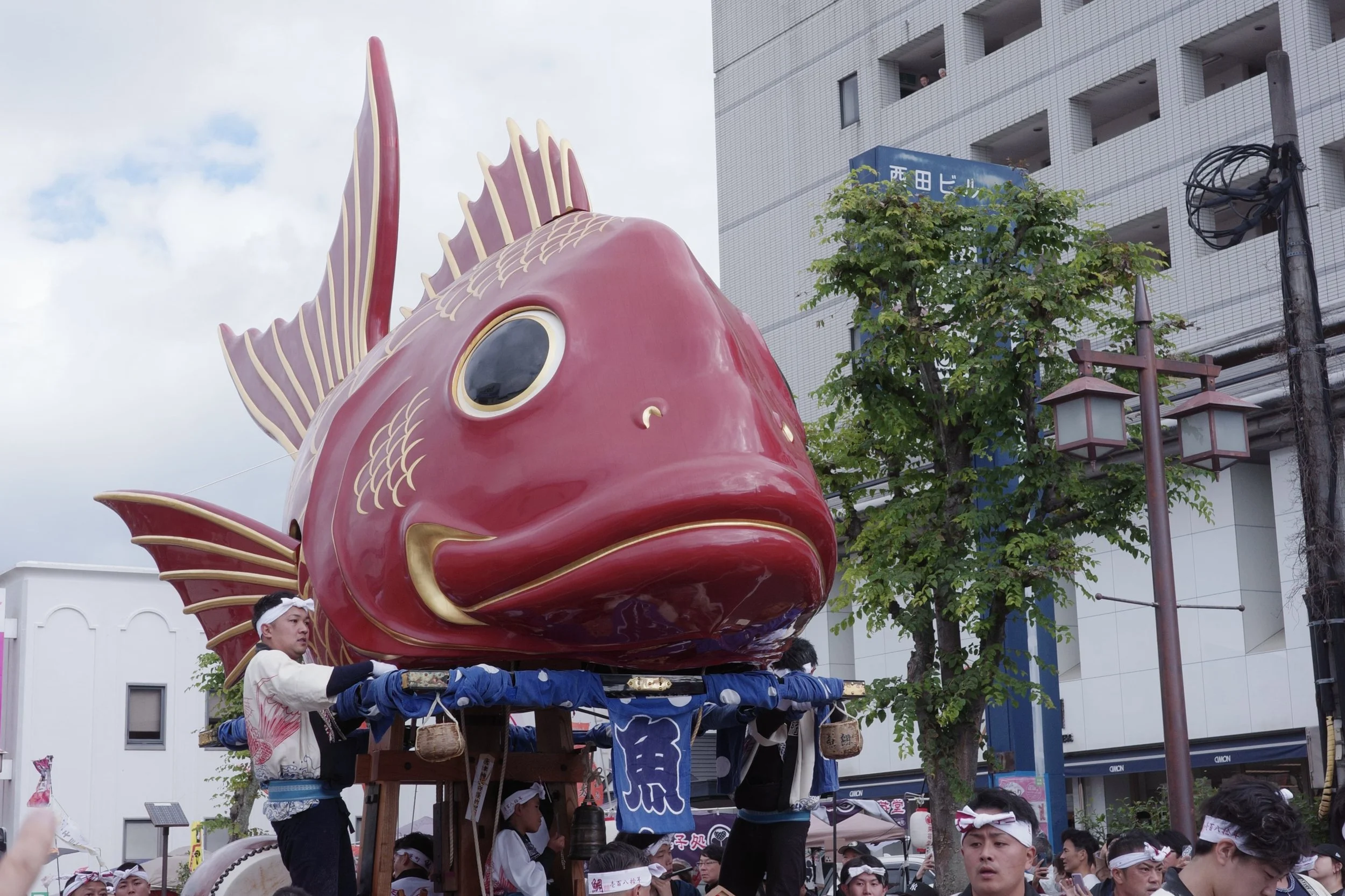
Hikiyama (曳山) at the Karatsu Kunchi Festival
Meeting Suematsu-san in the second week opened a new direction. He makes bamboo baskets and vases, and he kindly offered me some bamboo offcuts to work with. I didn’t know how bamboo should behave, but approaching it from a weaver’s perspective felt natural—treating each piece like a line that might join the cloth. His generosity stayed with me, not only through the material, but through the simple gesture of sharing what he works with every day.
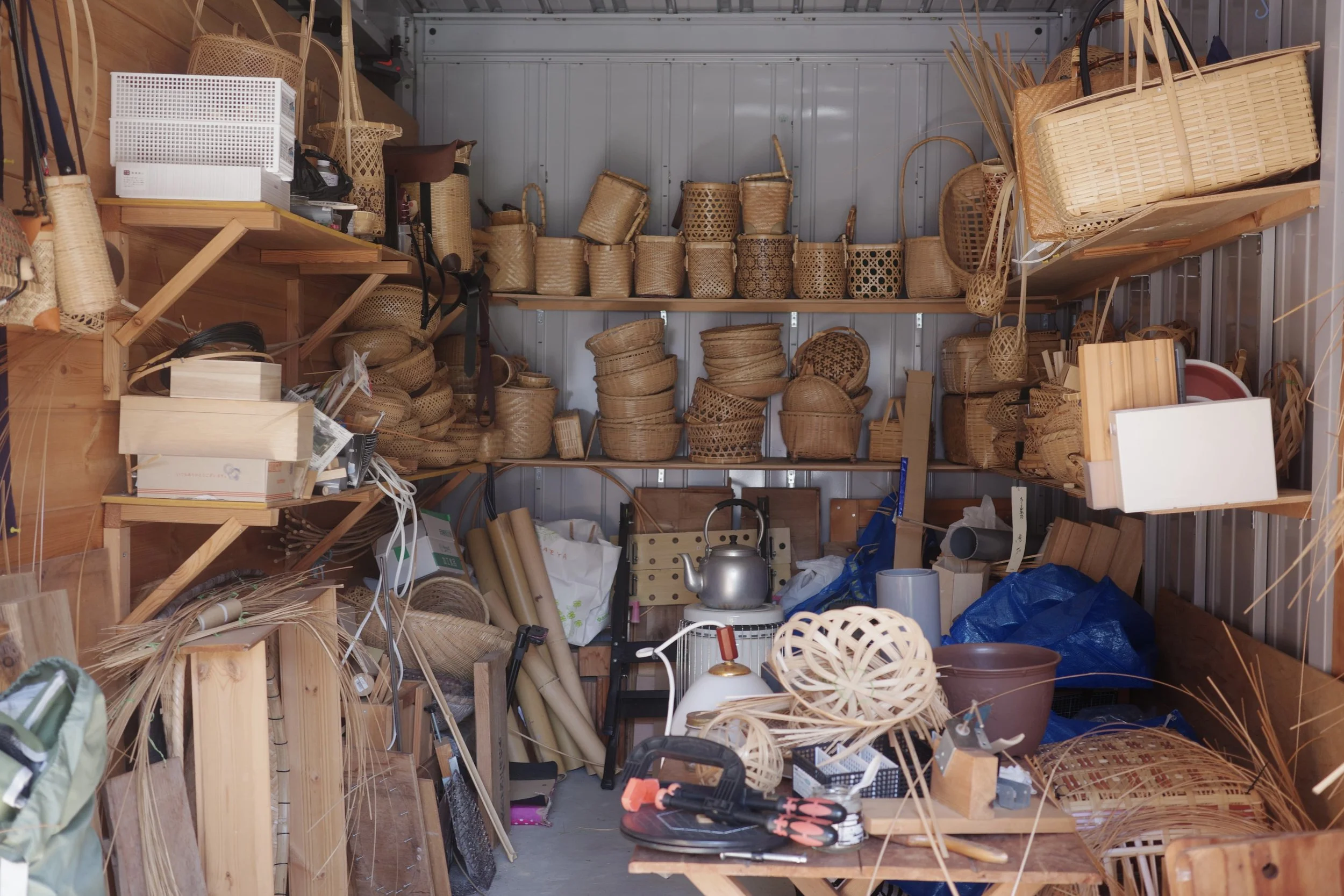
Corner of Suematsu-san's studio
In the studio I spent long hours with unfamiliar materials—paper, hemp, grass, bamboo. I learned through trial and small adjustments, figuring out how to weave each one in a way that felt right. I picked up fallen branches and bamboo sticks as hanging supports, simply because they were there—something I would never have imagined doing back home. The place made those decisions feel natural, even obvious.
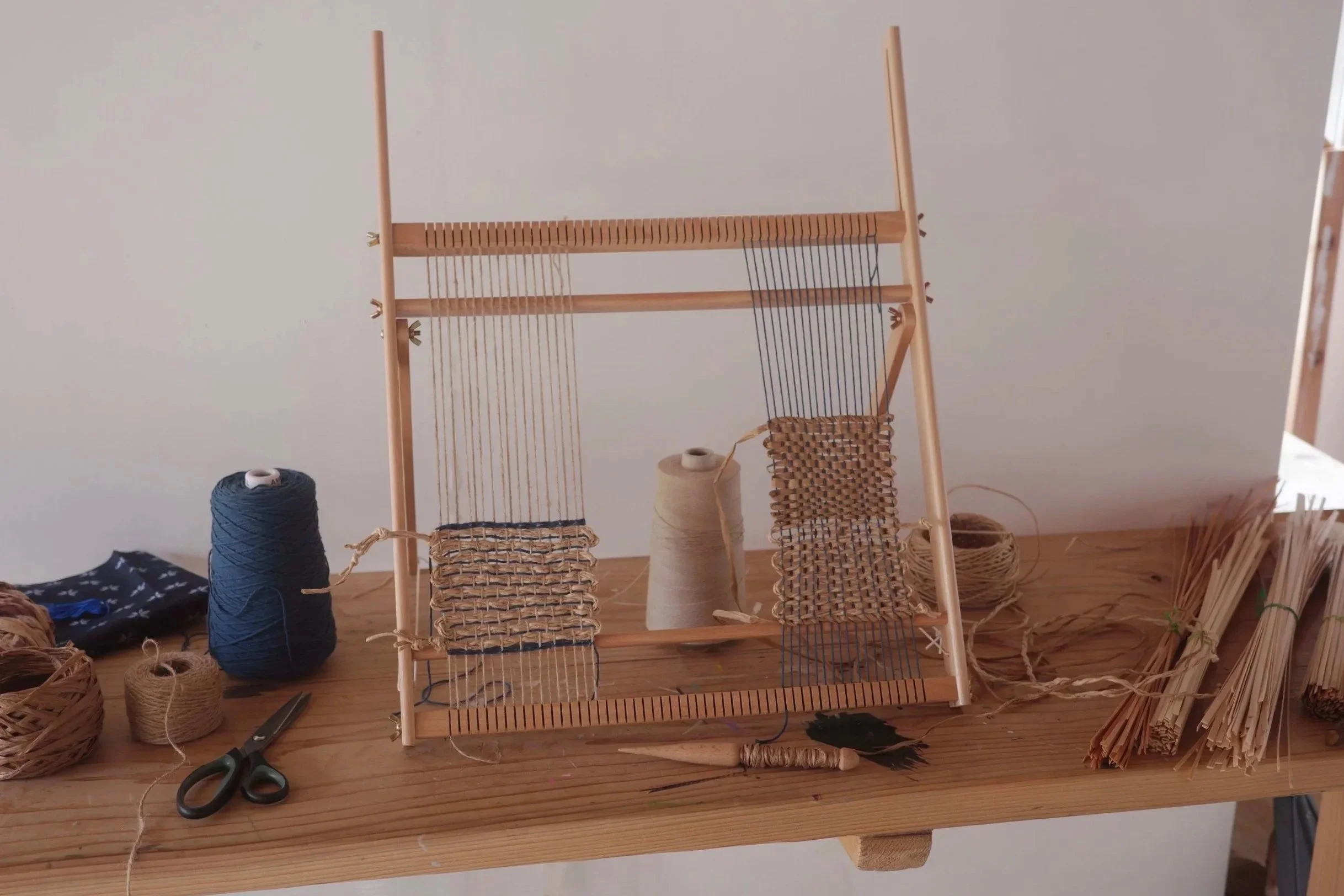
Weaving work-in-progress in the studio
By halfway of the month, my feelings had shifted from observing to belonging a little. I could cycle twenty minutes just for bread, and by the time I returned, I had already accepted the slowness. I knew the sea was always close if I needed a pause. The days felt grounded in a way I hadn’t expected. I carry a gentle memory of sunlight, the sound of bicycles on narrow roads, and small rhythms that shaped the work more quietly than any plan I had.
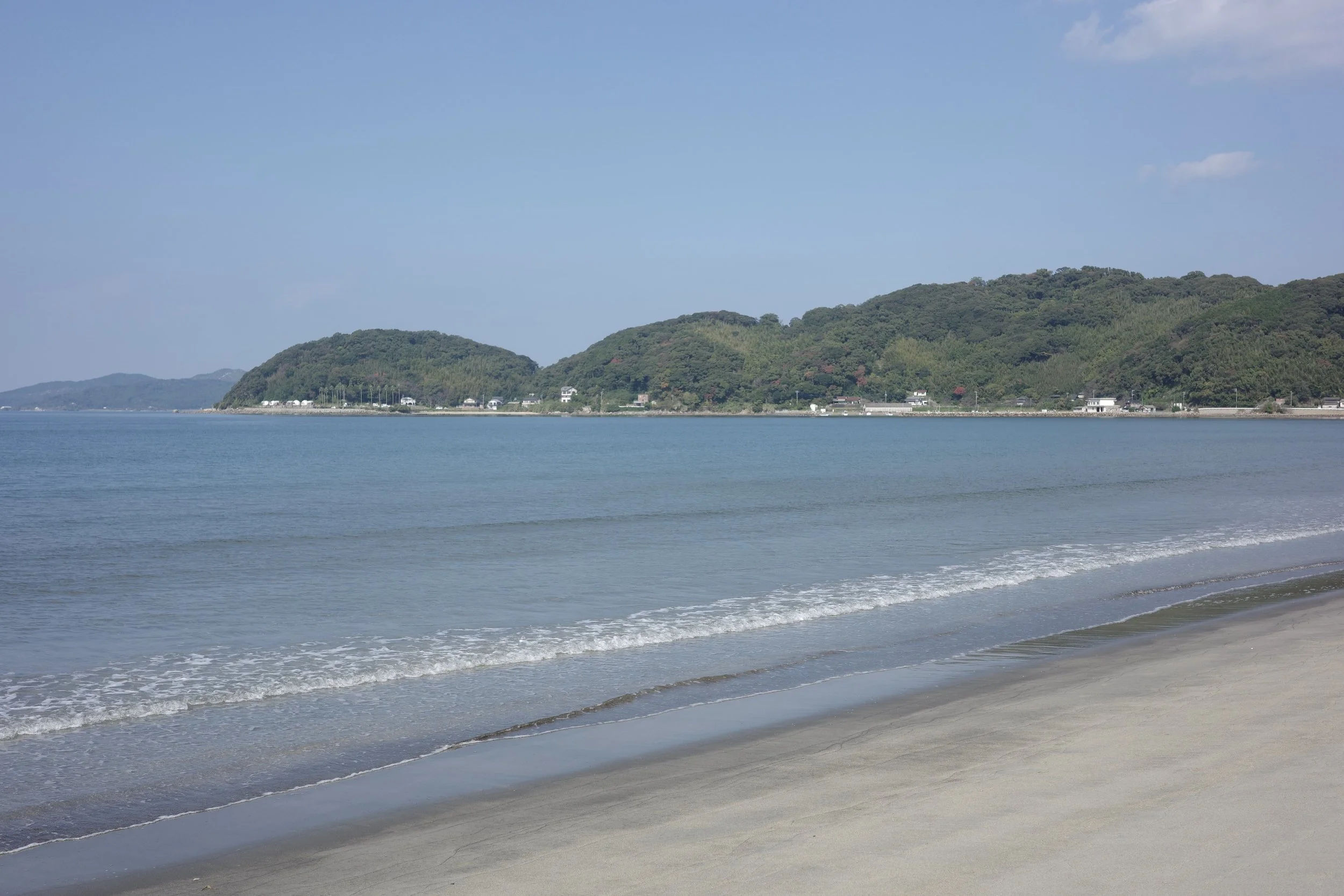
View from the Fukae Beach
Leaving came sooner than I expected, and more abruptly than I wanted. I had settled into a rhythm that felt honest and grounding, a way of living I had been missing. As I packed my materials and stepped out of the studio for the last time, I felt both grateful and reluctant, carrying the sense that something meaningful had just begun.
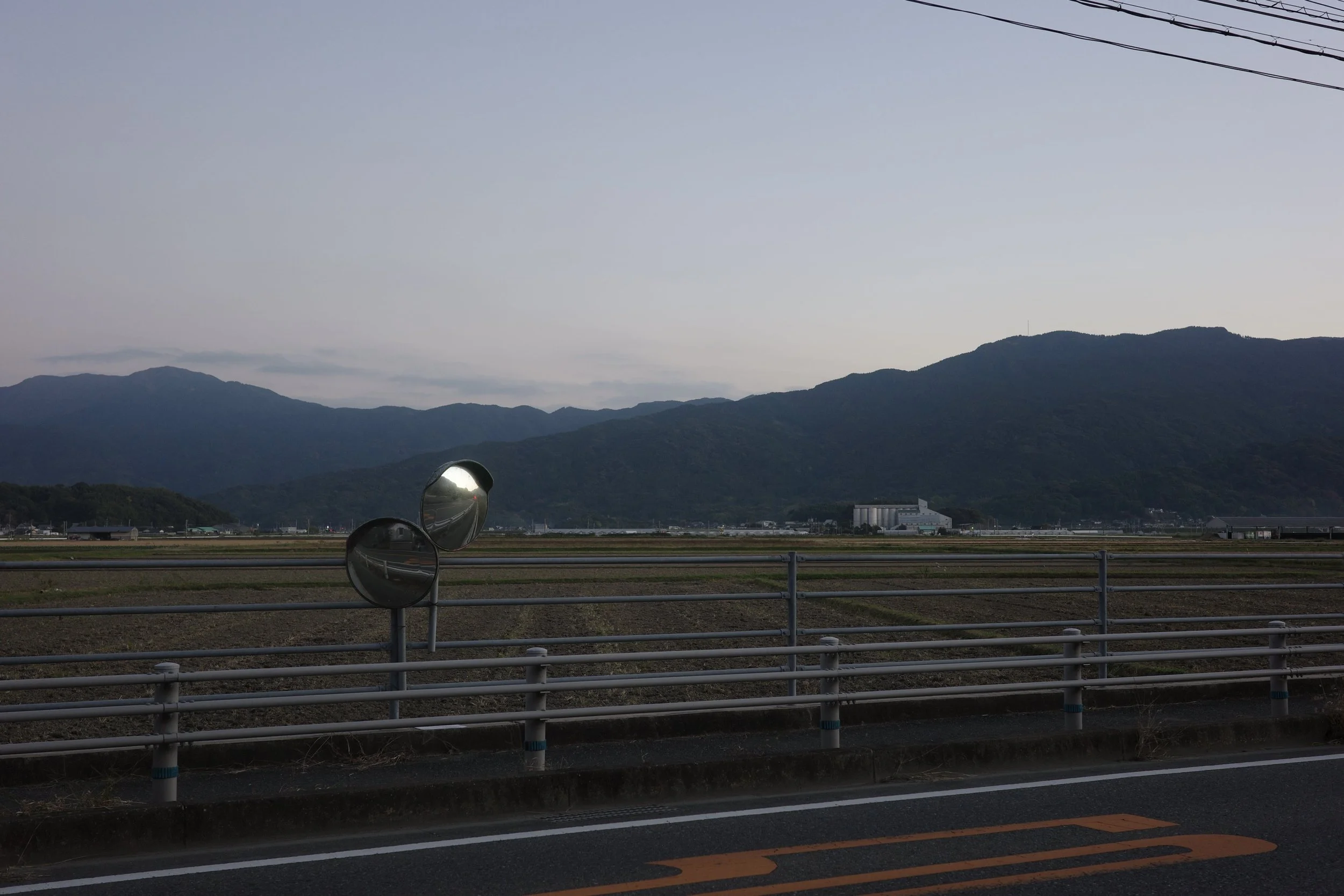
The rice fields of the Nijokatayama area
This month hasn’t finished for me yet—I think I’ll keep discovering what changed only after returning home. The work I made holds traces of this place, but so do the days themselves. I’m curious to see how Itoshima will continue to travel with me, slowly, in ways I probably won’t notice until much later.
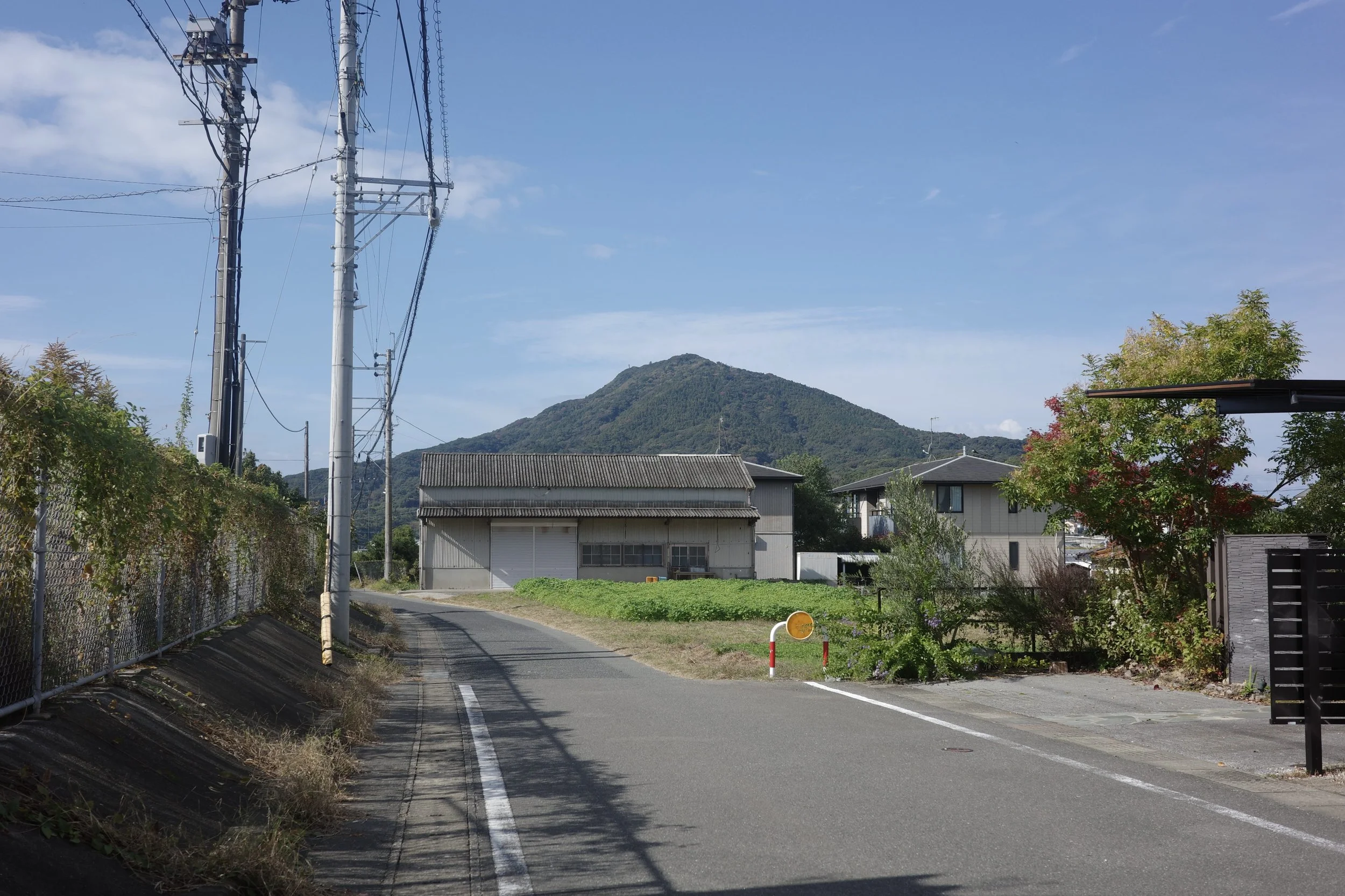
View from Maebaru of the Kayasan